
When you wear a beautiful Indian saree, you’re not just dressing up. You’re also connecting with a deep cultural heritage.
In India, the art of saree printing has been a family tradition for ages. Techniques like handblock printing and screen printing are used to make amazing designs.
Choosing between a handblock vs screen print saree requires knowing what each offers. This helps you pick the one that fits your style and preferences best.
Key Takeaways
- Understand the difference between handblock and screen print sarees.
- Learn about the unique characteristics of each printing technique.
- Discover which type of saree is right for you based on your style.
- Explore the cultural significance of saree printing in India.
- Make an informed decision when choosing your next saree.
The Rich Heritage of Indian Saree Printing Techniques
Saree printing in India is more than just beauty. It shows the country’s deep cultural roots. Over time, different printing methods have developed, making the sarees we love today.
The Cultural Significance of Printed Sarees in India
Printed sarees are very important in Indian culture. They show status, marital status, and where someone is from. The designs and patterns are not just pretty. They also carry deep cultural meanings, making each saree a unique piece of art.
Evolution of Printing Methods Through Centuries
Printing techniques for Indian sarees have changed a lot over the years. We’ve moved from traditional handblock printing to modern screen printing. This change came from new technology and what people want to buy.
| Printing Technique | Cultural Significance | Evolution Over Time |
|---|---|---|
| Handblock Printing | Symbolizes tradition and craftsmanship | Techniques refined over centuries |
| Screen Printing | Represents modernity and versatility | Adapted to changing consumer demands |
Knowing about the history of Indian saree printing helps us see the beauty of handblock and screen print sarees. Each method has its own special charm and cultural importance. Choosing between them is not just about looks. It’s about connecting with tradition or going for something modern.
Understanding Handblock Printing: A Traditional Art Form
Exploring Indian sarees reveals the rich heritage of handblock printing. This traditional method has been a key part of Indian textile art for centuries. It’s known for its intricate designs and patterns, passed down through generations.
The Ancient Origins of Handblock Printing
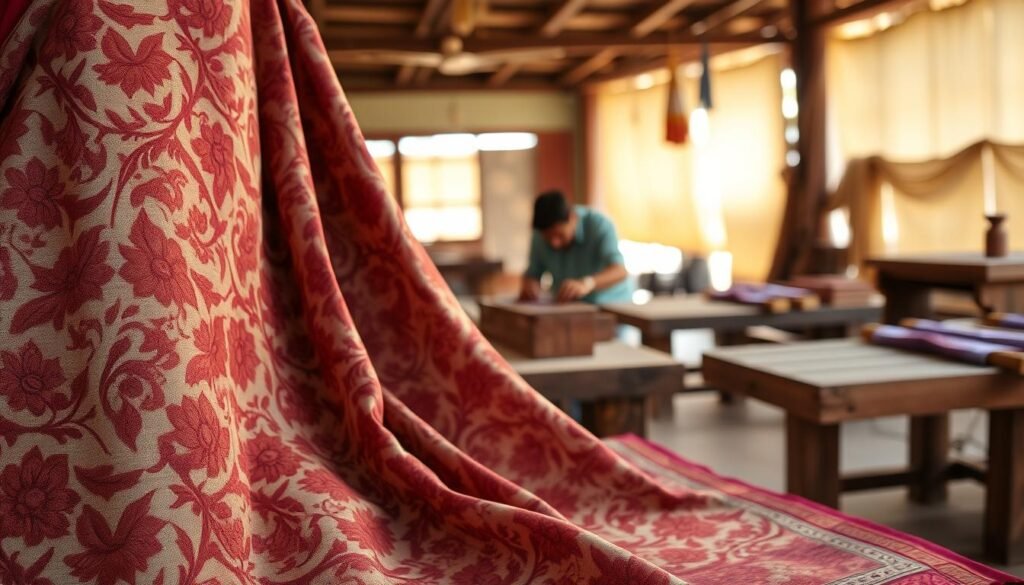
Handblock printing dates back to ancient India. It was used to create detailed designs on fabrics. The process involves carving designs onto wooden blocks, then printing them onto fabric.
This method is very labor-intensive. It requires great skill and precision. Each handblock printed saree is a unique piece of art.
The Meticulous Process Behind Handblock Printed Sarees
Making a handblock printed saree is a detailed and time-consuming process. It starts with preparing the fabric. Then, natural dyes are applied, followed by printing designs using wooden blocks.
The result is a stunning, intricate design. It’s both visually appealing and pleasing to touch.
Famous Handblock Printing Centers in India
India has several famous handblock printing centers. Bagh in Madhya Pradesh is known for its natural dyes and detailed designs. Bagru in Rajasthan is famous for its vibrant colors and traditional motifs.
These centers showcase the lasting legacy of handblock printing in Indian textile art.
| Printing Center | Known for |
|---|---|
| Bagh, Madhya Pradesh | Natural dyes, intricate designs |
| Bagru, Rajasthan | Vibrant colors, traditional motifs |
Understanding handblock printing helps you appreciate the craftsmanship of handblock printed sarees. It makes choosing between handblock and screen print sarees more informed.
Exploring Screen Printing: The Modern Alternative
Screen printing has become a favorite for creating detailed designs on sarees. This modern method has changed the textile world with its efficiency and versatility.
It brings out detailed designs and bright colors. This makes it a great choice for those wanting modern, stylish sarees.
Development of Screen Printing Technology
Screen printing technology has grown a lot over time. It’s now more advanced and easy to use. It started in commercial printing but now works well for fabrics, offering high-quality designs with precision.
How Screen Printing Works for Sarees
Screen printing uses a mesh screen to apply ink on fabric, making the design. This method is perfect for sarees because it allows for intricate patterns and vibrant colors. It involves preparing screens for each color for a precise application.
Popular Screen Printing Hubs in India
India has key screen printing spots, like Rajasthan and Gujarat, famous for textiles. These places are experts in screen printing, making high-quality sarees loved worldwide. When looking at handblock vs screen print saree, screen printing’s unique benefits stand out.
Handblock vs Screen Print Saree: Key Differences Explained
Choosing between handblock and screen print sarees requires knowing their unique features. As a buyer, understanding these differences is key.
Production Process Comparison
Handblock printing is a traditional method. It involves carving designs on wooden blocks and stamping them on fabric with natural dyes. This process is very detailed and requires skill.
Artisanal vs Mechanical Approaches
Handblock printing is a artisanal process that relies on manual labor. Screen printing, on the other hand, uses mechanical techniques to apply designs. This affects the quality and uniqueness of the final product.
Time Investment Differences
Handblock printing takes a lot of time, often days to finish one saree. Screen printing, being faster, can produce many sarees in less time. This makes it better for large orders.
Visual and Tactile Differences
Handblock and screen print sarees look and feel different. Handblock sarees have a unique texture and feel from the manual process. Each one is special because of its imperfections.
Texture and Feel Comparison
Handblock sarees feel softer and more organic. Screen print sarees have a uniform texture, which might lack the uniqueness of handblock prints.
Identifying Authentic Handblock Prints
Real handblock prints have slight imperfections and unique patterns. Look for slight variations in color and design to spot a handcrafted piece.
Artistic Expression and Uniqueness
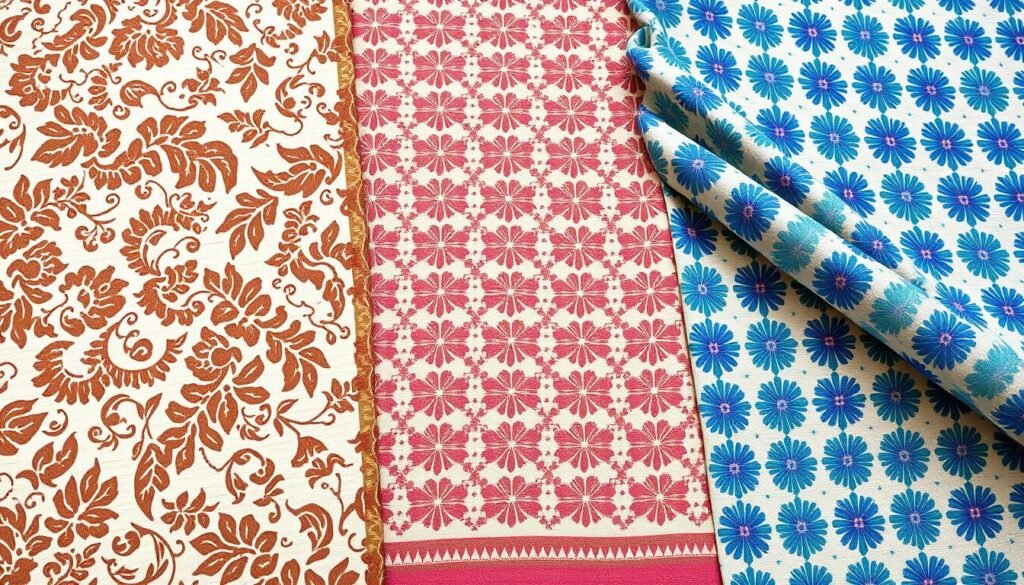
Both handblock and screen print sarees showcase unique artistic expressions. Handblock sarees are more exclusive because they’re made by hand, making each one a one-of-a-kind piece. Screen print sarees, while less unique, can still have detailed designs and bright colors.
Aesthetic Appeal: Design Possibilities and Limitations
Handblock and screen print sarees have their own unique charm. Each printing technique offers different design possibilities and limitations. These aspects define their beauty and allure in the world of Indian textiles.
Unique Characteristics of Handblock Designs
Handblock printed sarees are known for their traditional craftsmanship. Their beauty comes from their uniqueness and the human touch in each piece.
The Beauty of Imperfections
Imperfections in handblock prints are not flaws. They show the human element in their creation. These imperfections make each saree truly unique and authentic.
Traditional Motifs and Patterns
Handblock printing uses traditional motifs and patterns. These designs have been passed down through generations. They evoke a sense of heritage and cultural richness, appealing to those who love traditional Indian aesthetics.
Design Versatility in Screen Printed Sarees
Screen printed sarees offer a different aesthetic appeal. They are known for precision and versatility. The screen printing technique allows for a wide range of designs, from intricate patterns to bold, contemporary motifs.
Modern and Complex Designs
Screen printing excels in creating complex and modern designs. This makes screen printed sarees perfect for those who prefer a contemporary look or want to make a bold fashion statement.
Precision and Consistency
Screen printing ensures precise and consistent designs. This results in sarees with crisp, clear patterns. This consistency appeals to those who value uniformity in their clothing.
Color Vibrancy and Pattern Complexity
Both handblock and screen printing offer a wide range of color vibrancy and pattern complexity. Handblock prints often have softer, muted tones from natural dyes. Screen prints can achieve a broader spectrum of colors, including vibrant and bright shades.
The choice between handblock and screen print sarees depends on your personal style, the occasion, and your appreciation for traditional craftsmanship versus modern design versatility.
Quality and Durability Factors to Consider
When choosing between handblock and screen print sarees, look at their quality and how long they last. Each method has its own strengths that impact durability and wear.
Longevity of Handblock Printed Sarees
Handblock printed sarees are known for their durable craftsmanship. The natural dyes used in handblock printing tend to age gracefully, giving the saree a vintage appeal over time. But, how long they last depends on the fabric quality and the printing precision.
Wear and Wash Resistance of Screen Prints
Screen printed sarees have vibrant colors that resist fading well. The durability of screen prints depends on the ink quality and the printing method. Modern screen printing has made these sarees more durable.
Color Fastness Comparison
Color fastness is influenced by several factors:
- Natural vs Chemical Dyes: Handblock printing often uses natural dyes, which, while eco-friendly, may not be as colorfast as the chemical dyes used in screen printing.
- Long-term Appearance Retention: Screen prints tend to retain their vibrancy longer, but handblock prints develop a unique patina over time.
Natural vs Chemical Dyes
The choice between natural and chemical dyes impacts color fastness and environmental impact. Natural dyes are biodegradable and gentle on the skin, while chemical dyes offer a wider range of colors.
Long-term Appearance Retention
The long-term look of both handblock and screen print sarees depends on care. Proper washing, drying, and storage can make these garments last longer.
Price Points: Investment vs. Affordability
Understanding the price of handblock and screen print sarees helps you choose wisely. It’s about finding what fits your budget and style.
Understanding the Cost Factors for Handblock Sarees
Handblock printed sarees cost more because of the detailed work. The price depends on the design’s complexity and the artist’s skill.
Artisan Labor and Skill Valuation
The handblock printing process is labor-intensive. Artisans are paid for their skill and time. This ensures their craft is valued and they are fairly paid.
Premium for Authenticity
People often pay more for handblock sarees. They value the uniqueness and support traditional craftsmanship.
Price Range for Quality Screen Printed Sarees
Screen printed sarees are more affordable without losing quality. They are cost-effective because they can be made in large quantities.
Mass Production Economics
Screen printing’s mass production lowers costs. This makes these sarees more affordable for many. Quality is not sacrificed, thanks to modern techniques.
Value for Money Assessment
Consider durability and style when evaluating screen printed sarees. They are a stylish, budget-friendly choice for many occasions.
Environmental Impact and Sustainability
As we become more aware of sustainability, it’s important to look at the difference between handblock and screen print sarees. When you’re thinking about buying a saree, knowing how eco-friendly these methods are can help you decide.
Eco-Friendliness of Traditional Handblock Printing
Handblock printing is known for being good for the environment. It uses natural dyes and materials, which is better for the planet. This traditional method is hard work but makes sustainable products.
Environmental Considerations for Screen Printing
Screen printing is efficient but has a bigger environmental impact. It uses chemicals and dyes that can harm the environment. But, many screen printers are now using eco-friendly methods to lessen their harm.
Sustainable Innovations in Both Techniques
Both handblock and screen printing are getting better with new sustainable ideas.
Eco-Friendly Dyes and Materials
The move to eco-friendly dyes and materials is a big step forward. Natural dyes from plants and minerals are being used more. This reduces the need for synthetic chemicals.
Ethical Production Practices
Ethical production practices are becoming more common. This includes fair wages, safe work places, and sustainable ways of making things. These are now key for many makers.
Here’s a comparison of the environmental impact of handblock and screen printing techniques:
| Printing Technique | Eco-Friendliness | Environmental Impact |
|---|---|---|
| Handblock Printing | High | Low |
| Screen Printing | Moderate to High | Moderate |
Your choices can help make the textile industry more sustainable. By picking screen print sarees or handblock printed sarees from eco-friendly makers, you support a greener fashion world.
Styling Tips: How to Wear and Pair Each Type
Learn to style handblock and screen printed sarees for any event. Whether it’s a formal gathering or a casual day, these tips will enhance your saree look.
Occasion-Based Styling for Handblock Sarees
Handblock printed sarees are great for many occasions. Here are some styling tips:
Formal and Cultural Events
For formal events, pair your handblock saree with detailed jewelry and a matching blouse. The intricate prints and designs are perfect for these occasions.
Casual and Office Wear
For casual or office wear, choose simpler accessories and a toned-down blouse. This keeps the look stylish yet simple.
Creating Contemporary Looks with Screen Printed Sarees
Screen printed sarees add a modern twist to traditional Indian wear. Here’s how to style them:
Modern Fusion Styling
Pair your screen printed saree with modern tops or blouses for a fusion look. This gives a modern twist to traditional sarees.
Trendy Draping Techniques
Try different draping styles to refresh your screen printed saree. From Nivi to modern styles, there are many options.
Accessorizing Tips for Both Varieties
Accessories are key to your saree look. Here are tips for both handblock and screen printed sarees:
- For a traditional look, choose statement jewelry that matches your saree’s print and color.
- For a modern look, go for minimalist jewelry.
- Make sure your blouse and accessories match the saree’s color and fabric.
| Saree Type | Occasion | Styling Tips |
|---|---|---|
| Handblock Printed | Formal/Cultural Events | Pair with intricate jewelry and a matching blouse. |
| Handblock Printed | Casual/Office Wear | Opt for simpler accessories and a subdued blouse. |
| Screen Printed | Modern Look | Mix with modern tops or blouses for a fusion look. |
| Screen Printed | Trendy Look | Experiment with different draping techniques. |
Maintenance and Care Guidelines
Whether you’ve bought a handblock or screen print saree, knowing how to care for it is key. The right care keeps your saree looking great and lasts longer.
Proper Storage and Handling of Handblock Sarees
Handblock sarees need special care to avoid damage. Keep them in a cool, dry spot, away from sunlight.
Preventing Color Bleeding and Fading
To stop colors from bleeding, don’t let your handblock saree get too wet. Wash it in cold water with a gentle detergent.
Seasonal Care Tips
In humid seasons, store your saree with silica gel packets to keep it dry. In dry seasons, keep it away from heaters.
Cleaning and Preserving Screen Printed Sarees
Screen printed sarees are tough but need gentle cleaning. Always check the fabric care label before washing.
Washing Techniques
Wash screen printed sarees by hand gently. Don’t use a machine to avoid harming the fabric and print.
Ironing and Folding Methods
Iron your screen print saree on a low setting. Don’t fold it in the same spot to avoid permanent creases.
By following these care tips, your handblock or screen print saree will last for years. The secret to keeping your saree in top shape is in how you store, clean, and handle it.
Making Your Choice: Factors to Consider
Choosing between handblock and screen printed sarees requires careful thought. You need to think about what you need and what you like.
Budget Considerations
Your budget is key when picking between handblock and screen printed sarees. Handblock printed sarees cost more because of the hard work and skill needed. Screen printed sarees, on the other hand, are cheaper. They come in different prices based on design quality and complexity.
Occasion and Frequency of Use
Think about when and how often you’ll wear the saree. For special events or as a keepsake, a handblock printed saree is ideal. For everyday wear, a screen printed saree is a good choice.
Personal Style and Preferences
Your personal style matters a lot. If you love traditional craftsmanship and unique designs, handblock printing is for you. If you prefer modern designs and variety, screen printed sarees are better.
- Traditionalist vs Contemporary Aesthetic: Decide if you like traditional or modern designs.
- Collection Building Strategy: Think about how the saree fits into your collection, whether it’s a statement piece or a complement.
Conclusion: Embracing the Beauty of Indian Textile Art
Exploring handblock and screen print sarees is more than picking a garment. It’s diving into a deep cultural heritage. The detailed designs and bright colors show India’s textile art at its best.
The difference between handblock and screen print is more than just technique. Each saree has its own story. Handblock sarees are works of art made with care. Screen print sarees bring a fresh look with their bold designs and colors.
Whether you love traditional handblock or modern screen print, you support skilled artisans. Wearing a handblock or screen print saree is like wearing a piece of India’s history. It’s not just fabric; it’s a part of India’s rich textile heritage.
When picking a saree, think about its story. Choose one that fits your style, whether handblock or screen print. You’ll carry on a tradition that’s woven into Indian culture.